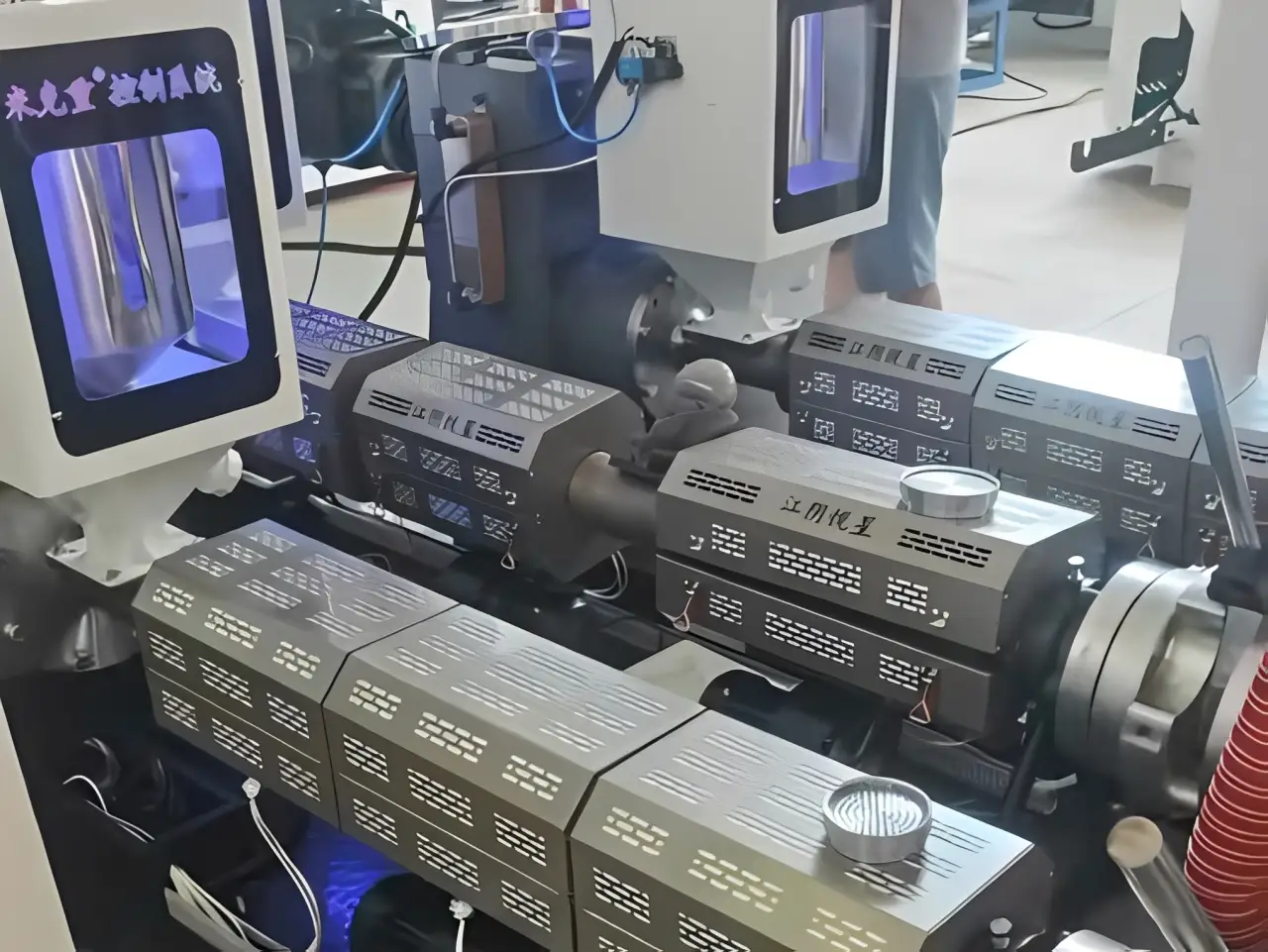
Multi-Layer Film Blowing Machine: ABA, ABC or 5-Layer?
2026-10-27"Three-layer film blowing machine" is one of the most common requests that reaches our inbox. It sounds like a specification. It isn't one.
Two quotes for a multi-layer film blowing machine are often not quotes for the same machine. One is ABA, the other is ABC, and the difference shows up in your product range, not in the model number.
After 30 years building these lines, the ABA / ABC / 5-layer choice is one of the first things I settle with a buyer — because getting it wrong is expensive to undo.
ABA and ABC Are Both "3-Layer." They Are Not the Same Machine.
The extruder count is the first thing that separates them, and both can put cheaper material in the core.
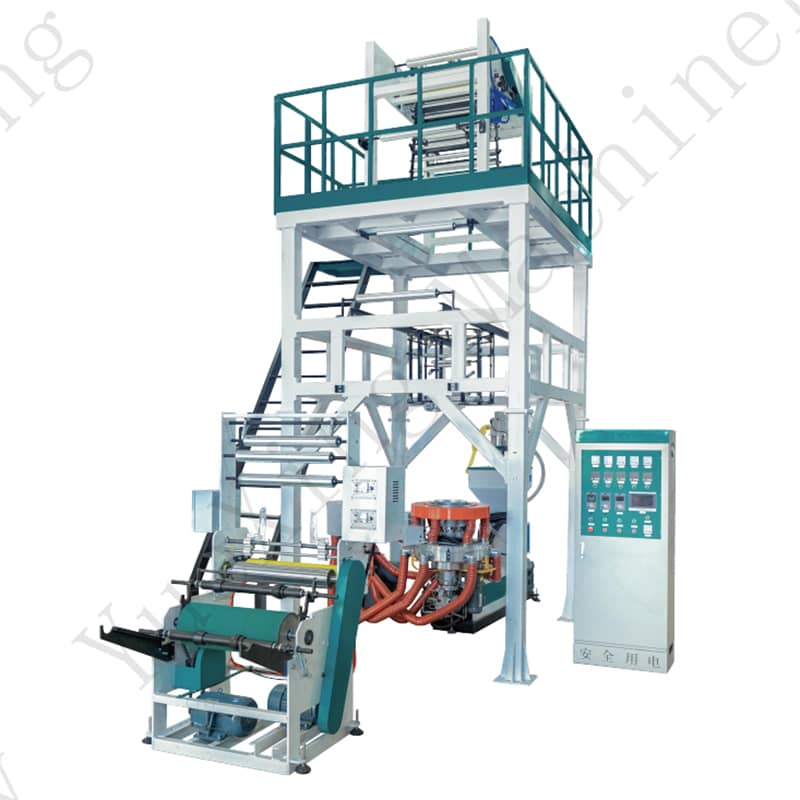
An ABA line has two extruders. One runs the A resin and splits its melt to both surfaces; the other runs the core. That is why both faces are always identical and the film comes out symmetric. The core can take recycled, off-spec or mineral-filled resin — a straight cost play that changes nothing on the surface. Two extruders also make it the simplest of the three to run, and that is why ABA is the workhorse for courier inner film, garbage bags and shopping bags. Our standard ABA platform covers 1100–1600mm layflat width, and the five applications where an ABA line pays off are almost all in that list.
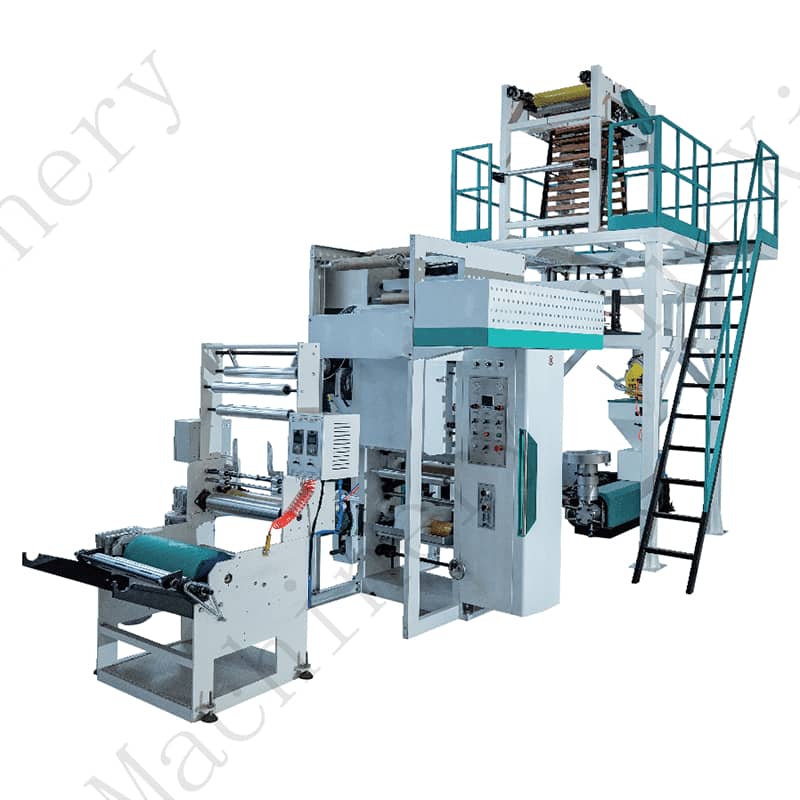
An ABC line has three independent extruders, so each skin can run its own resin and the film can be asymmetric. Typically the outer layer takes abrasion and carries the print, the middle layer holds recycled material or a barrier resin, and the inner layer is the seal layer — usually a lower-melting mLLDPE or EVA, so the bag closes at a temperature the printed surface can survive. Our standard three-layer ABC co-extrusion platform covers 1350–2600mm layflat width. You pay for the flexibility with a third extruder and a more complex die, which is why it only earns its keep when the two faces genuinely have different jobs: food packaging, high-end functional film, or a barrier in the middle.
That is the whole decision. Symmetric film, cost as the driver: ABA. Two faces with two different jobs: ABC. For the short version, we have a plain-language explainer on the difference between ABA and ABC blown film lines.
What Each Layer Actually Does
The 3-layer co-extrusion principle is the same across all of them: put the expensive material only where the film needs it.
| Configuration | Layer structure | Where the saving comes from | Fits best |
|---|---|---|---|
| ABA (3-layer) | A–B–A, identical outer layers | Recycled, off-spec or mineral-filled resin in the core | Courier inner film, garbage bags, shopping bags |
| ABC (3-layer) | A–B–C, each skin can run its own resin | Recycled core, plus barrier resin only where it is needed | Food packaging, high-end functional film, films needing different properties per side |
| 5-layer | More layers; tie layers only where a barrier sits | A thin, exact barrier layer; tie layers bond materials that won't sit together | Food, medical, high-barrier packaging |
ABA does it on one axis — surface versus core. ABC does it on two, including across the faces. Five layers go further with tie layers, which is the next question.
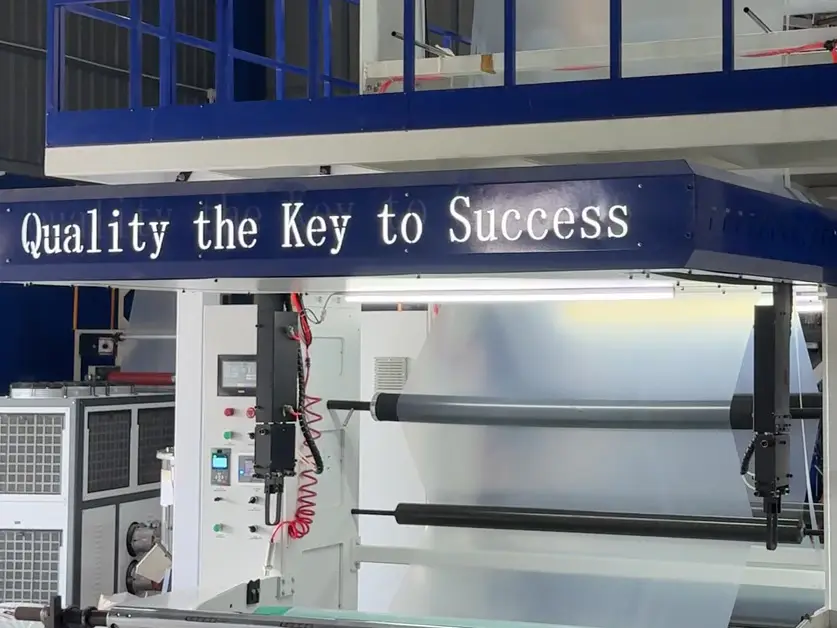
When 5 Layers Is Worth It — and When It Isn't
A five-layer line is not automatically better. It is more capability, more cost, more to keep stable. I move a buyer up to 5 layers only when one of these is true:
-
The barrier has to be bonded from both faces. EVOH or PA between polyolefin skins needs a tie layer on each side, and that alone is five layers. A 3-layer die can carry a barrier resin; it cannot carry two tie layers around it.
-
The structure has to be symmetric — A/tie/EVOH/tie/A — which is what keeps a high-barrier film from curling as it cools.
-
You are running EVOH at all, which means drying and a barrier screw. That has to be designed in from the start, not retrofitted.
-
The end product — food, medical — demands it, or a customer's spec writes it in.
If none of that applies, a well-built ABC line usually out-earns a five-layer machine that never runs near capacity. Extra layers carry capital cost, energy and maintenance on the days they add nothing a 3-layer structure could not already do. For the projects that do need them, the ABC rotating 1–5 layer platform is where most of them land.
What a Custom Multi-Layer Machine Actually Changes
Three things drive the price, and all three are mechanical.
Film width is set by die diameter and blow-up ratio, not by a setting on the panel. Within the die's blow-up window you can trim the width; outside it you need a different die, and going wider usually means a taller tower. Going narrower is cheaper but not free — dropping the blow-up ratio costs you transverse strength and leaves the film unbalanced, over-oriented in the machine direction. The calculation is in blow-up ratio of a film blowing machine.
Resin changes the screw and the temperature profile. A recycled core needs melt filtration in front of the die, not just a different screw. A barrier resin needs drying and a dedicated screw.
Cooling decides output. IBC is a capacity decision as much as a stability one: internal cooling raises what the same tower can cool, so you run more kilograms at the same height, with a tighter gauge across the roll.
If your film needs a structure that no catalogue model covers, that is a custom film blowing machine — and the first question is whether the extra layers buy something the market will pay for. Two builds that went past the catalogue: a 2600mm wide-width line in Egypt and a three-layer ABC line with IBC in Thailand.
How to Read a Multi-Layer Quote
Every quote says "3-layer." The differences live in the details. Line two quotes up and sort each line into this table:
| What to look for | Why it matters | Red flag |
|---|---|---|
| Die diameter and layer structure | Sets maximum film width and how many materials you can run | "3-layer" with no layer detail |
| Layer ratio (A/B/A %) | Shows whether the extruder sizes were engineered for your film or picked from stock | No split given at all |
| Screw diameter and L/D for each extruder | Determines output and which resin each layer can handle | No per-extruder figures stated |
| Cooling system (IBC or not) | Bubble stability and output on long runs | Not mentioned at all |
| Winder type | Roll-change time and film consistency | "Standard winder" |
If a supplier cannot fill this in, that is your answer. Then ask three things. If my film width changes by 300mm, what changes on the machine — the die, the tower, or nothing? If I run 60% recycled in the core, what happens to output, and what filters the melt? If the die is rebuilt in two years, who pays, and how long does the line stop?
Decide in One Line
Symmetric film, cost as the driver: ABA. Different properties on each face, or a barrier in the middle: ABC. A barrier that needs tie layers on both sides, or a spec that says five layers: 5-layer.
Send us the film spec — end product, width, resin — and we will tell you which structure we would build and what it changes in the cost. If you are still working out whether you need more than one layer at all, start with single-layer vs multi-layer film blowing machines.
By Ryan Zhang, CEO, Jiangyin Yuexing Machinery Co., Ltd. — manufacturing film blowing machines since 1996, with over 2,000 installations across 30+ countries.
📧 ryanzhang911222@gmail.com | 📱 WhatsApp +86 13771616165 | 🌐 https://yxfilmblowingmachine.com/
Expert Insights & FAQ
Previous:Film Blowing Machine for Sale: Why Prices Differ by 50%
Next:Nothing...