Custom Film Blowing Machine: Configuration vs. Custom Engineering (2026 Guide)
2026-09-23I got an email the other day from a buyer comparing quotes for a 2200mm ABC line. He couldn't figure out why one supplier was 40% cheaper than another. Both said they could do 2200mm. Both said "customized to your specs."
The difference wasn't that one supplier was lying. It was that they were using completely different die sizes — and therefore completely different blow-up ratios. The more expensive quote used a die sized for a stable, moderate BUR with good film uniformity. The cheaper one used a smaller standard die and cranked the BUR way up to hit the width. On paper, both produce 2200mm film. In production, the thickness consistency, bubble stability, and scrap rate are very different.
That's the problem with the word "custom" in this industry — it means everything and nothing. I hear some version of this confusion at least a few times every month.
A supplier who says "yes, we can customize" might mean they'll swap a voltage label. Or they might mean they'll design a new die head from scratch. The difference matters for your budget, your lead time, and whether the machine actually works when it arrives.
After 30 years of building film blowing machines — and fixing more than a few "custom" machines that other suppliers sold but couldn't make run — I've learned that real customization falls into three categories. Here's how to tell which one you need.
1: Configuration (Same Machine, Different Settings)
Configuration changes are adjustments to a standard model without changing its core design. These are low-risk, add minimal cost, and typically add 1–2 weeks to the lead time.
Common configuration requests include:
Voltage and frequency matching— 380V/50Hz is standard in China; many markets require 220V, 415V, or 60Hz
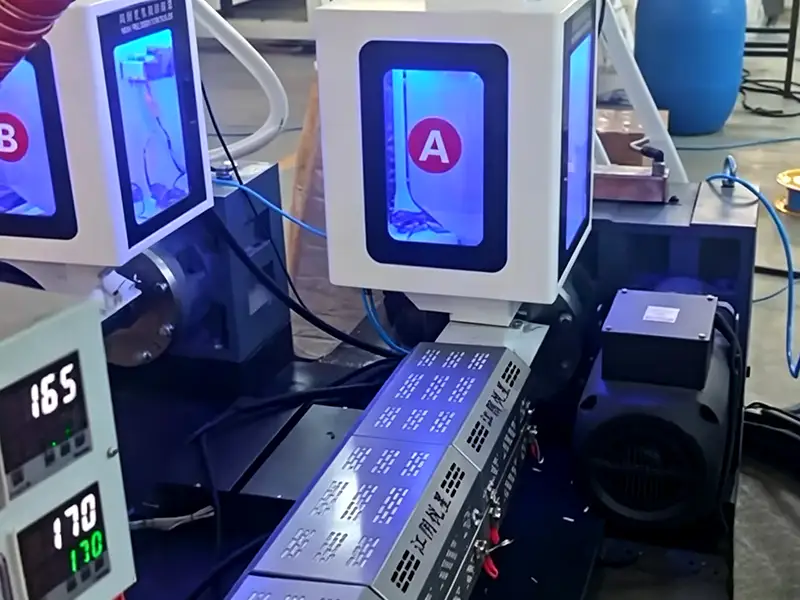
Material compatibility — Adjusting screw design and temperature zones for mLLDPE, EVA, or biodegradable resins like PLA/PBAT
Auxiliary equipment— Auto loaders, corona treaters, gravimetric blenders, edge trim recyclers
Winder configuration— Single, double, or automatic roll change
Key question to ask: Is this a standard option on your spec sheet, or does it require engineering changes?
2: Semi-Custom (Standard Platform, Modified Components)
Semi-custom builds use our proven base platform but modify one or two major components to hit a specific target. This is the most common type of customization for buyers who need more than the catalog offers but don't need a ground-up design.
Wider Film Width
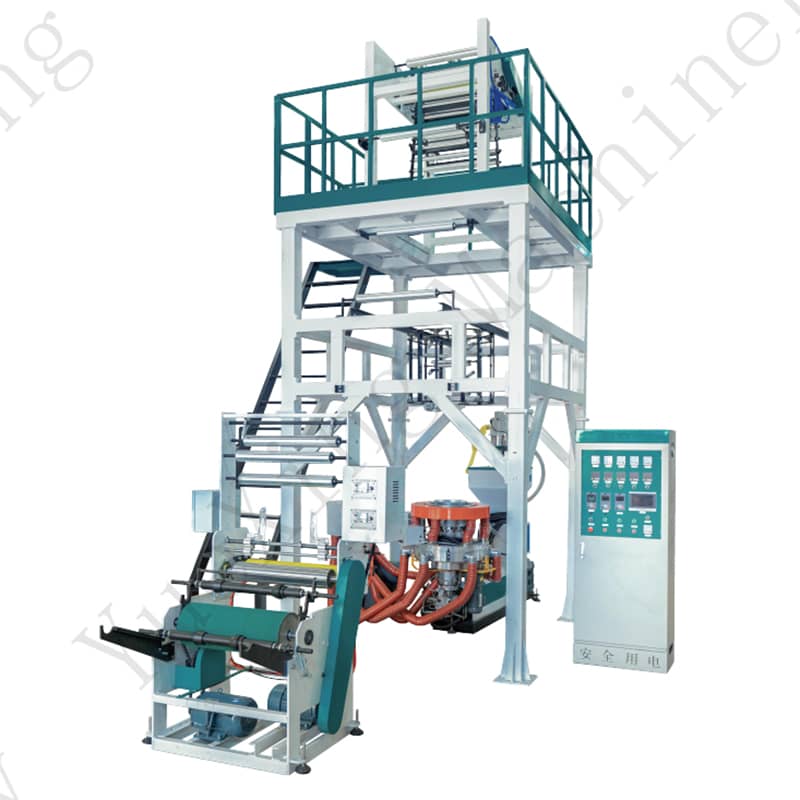
Our standard ABC three-layer line goes up to 2,600mm layflat width. For buyers who need wider film — for express bags, large pallet covers, or agricultural mulch — we scale up the die diameter, widen the tower, and upgrade the winding system.
For example, we delivered a 2600mm wide-width film blowing machine to an Egyptian packaging company. They had been running 1800mm lines and needed more capacity for e-commerce courier bags. One new line replaced the output of three of their old lines — with 35% higher efficiency per shift and a yield rate above 98.5%.
What changes in a wide-width build:larger die (matched to your BUR range), taller cooling tower, wider nip rollers and winder shafts, enhanced IBC cooling, and reinforced frame.
Typical lead time:14–16 weeks for a wide-width ABC line.
.webp)
More Layers (3 to 5)
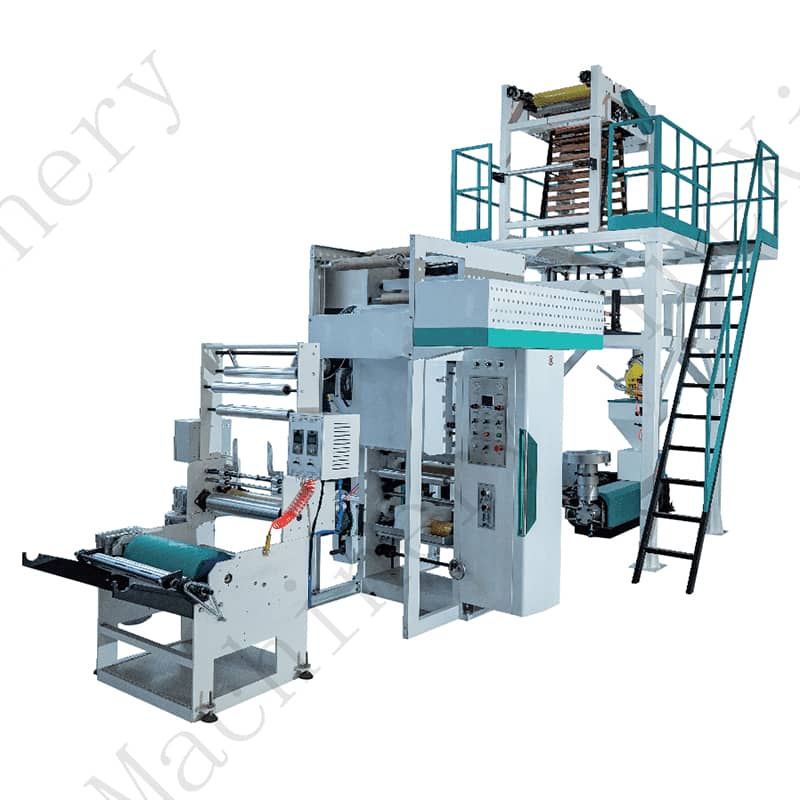
If you need better barrier properties for food packaging or lamination film, a 5-layer co-extrusion die is a semi-custom option — not a development project. Our YXMF-ABC rotating 1-5 layer platform is designed to be configurable from 1 to 5 layers, with each layer's output independently controlled.
Adding layers means more extruders, a more complex die head, and a control system that manages multiple material streams. But the core platform is proven — we've delivered these configurations to customers across Southeast Asia and the Middle East.
Typical lead time:16–18 weeks for a 5-layer configuration.
3: Full Custom Engineering (New Design)
Full custom projects are rare — they happen when a buyer has a unique application no standard platform can handle. These are genuine development projects that require testing, iteration, and a higher budget.
Examples include:specialized 7-layer barrier film lines (PA/EVOH/PE), lines for unique resin blends the supplier has never processed, ultra-high-output lines (400+ kg/h), or complete turnkey line integration.
For full custom projects, you should expect:a technical feasibility study before deposit, sample runs with your actual resin, a clear timeline for design/fabrication/testing, factory acceptance testing (FAT) before shipment, and a warranty tied to agreed performance specs.
Typical lead time: 20–28 weeks, depending on complexity.
The Red Flag: "No Problem" Without Questions
Here's the simplest test of whether a supplier is actually customizing or just saying yes: do they ask for specific technical details before quoting?
A supplier who knows what they're doing will ask for:
Target layflat width and film thickness range
Specific resins you'll be running (melt index, density)
Required output in kg/h
Factory's available height and floor space
Local voltage and frequency
Whether you need IBC cooling, rotary die, or thickness control
End application (courier bags, food packaging, agricultural film, etc.)
If a supplier quotes you a "custom" machine without asking for your resin spec sheet, target output, or factory dimensions, they're not customizing — they're guessing. And you'll pay for the guess when the machine arrives and doesn't perform.
I learned this the hard way early in my career. A customer wanted a machine for a biodegradable resin blend we hadn't tested. I said "yes" because I figured PE is PE, right? It wasn't. The melt index was different, the screw wouldn't feed consistently, and we spent three weeks on the factory floor reworking the whole thing. We lost money on that order, but I learned a lesson I still tell my sales team: if you haven't run the material, you don't quote it as a standard build.
Quick Reference: What Does Your Project Need?
Not sure whether your requirement is a configuration, a semi-custom build, or a full engineering project? Here's a rough guide to give you a sense of what to expect. Keep in mind these are general ranges — the actual cost and timeline depend on your specific specs, the base model you're starting from, and current material prices.
| Your Requirement | Category | Typical Cost Impact | Typical Lead Time Impact |
|---|---|---|---|
| Different voltage | Configuration | +2–5% | +1 week |
| Add auto loader / corona treater | Configuration | +5–15% | +1–2 weeks |
| Wider film (within 20% of standard) | Semi-custom | +15–30% | +4–6 weeks |
| 3-layer → 5-layer | Semi-custom | +30–50% | +6–8 weeks |
| New resin type / special barrier | Full custom | +50–100%+ | +12–16 weeks |
| Complete turnkey line integration | Full custom | Varies widely | +20+ weeks |
These are general ranges — actual cost and timeline depend on your specific specs, base model, and current material prices.
Real Customization Starts with Real Questions
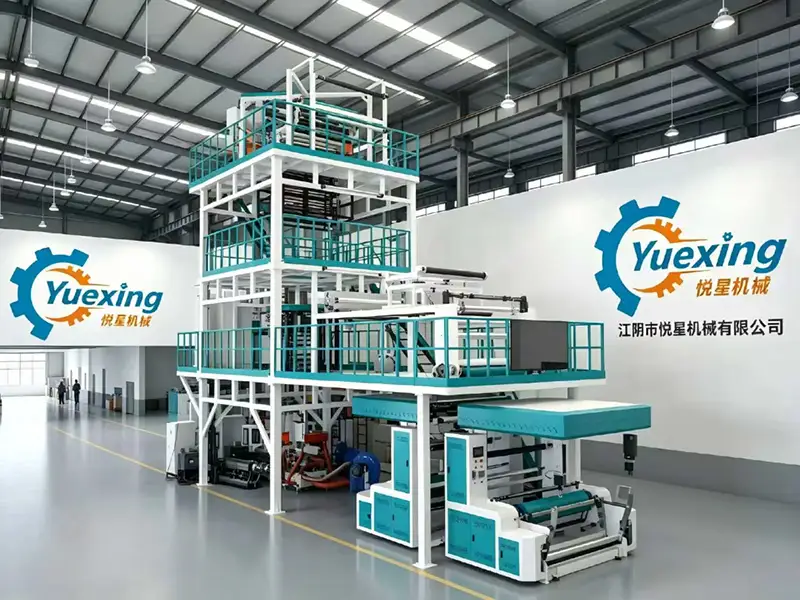
At Jiangyin Yuexing Machinery, we've been building custom film blowing machines since 1996. Our standard platforms cover single-layer, ABA, and ABC configurations from 700mm to 2600mm. For anything beyond that, we work through the specs with you — and we'll tell you upfront whether it's a straightforward modification or a development project.
Let me be honest: we've turned down custom projects before. If it's a material we've never run and we can't test it first, or if the specs are outside what we know our platform can handle, we'd rather say no than sell you a machine that doesn't perform. It's not worth the headache for you — or for us.
If you're working on a project outside the standard catalog, **[send us your spec sheet](mailto:ryanzhang911222@gmail.com)** — target width, thickness, output, and materials. We'll review it and tell you exactly what category your customization falls into, with a realistic quote and timeline. And if it's not a good fit for us, we'll say that too.
Written by Ryan Zhang, CEO, Jiangyin Yuexing Machinery Co., Ltd.
30 years in blown film extrusion technology. 2000+ machines delivered to 30+ countries.
Contact:ryanzhang911222@gmail.com | WhatsApp: +86 13771616165
Expert Insights & FAQ
Previous:Can Your Blowing Machine Handle Biodegradable Film?
Next:Nothing...