Can Your Blowing Machine Handle Biodegradable Film?
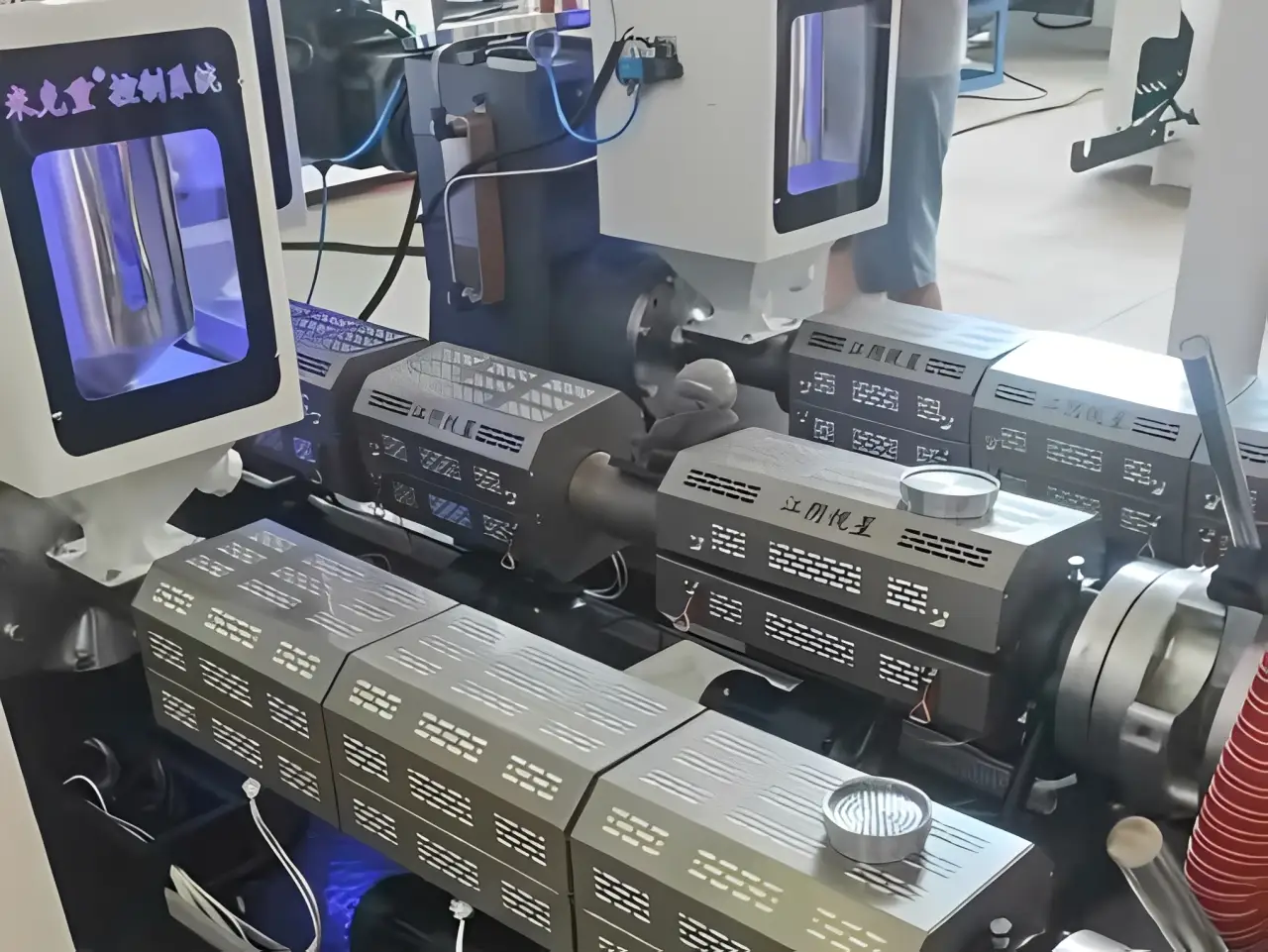
2026-09-09Three things usually change when you switch from standard PE to PLA or PBAT on a film blowing machine. The die gap needs widening—biodegradable resins don't flow like LDPE, and a narrow gap creates back pressure that burns the material. The cooling rate has to drop. These materials crystallize slower, so if your air ring blows too hard too early, you get cloudy film with weak tear strength. And the screw profile matters more than people think. A general-purpose L/D ratio of 28:1 works for polyethylene, but PLA needs at least 30:1 to shear properly without degrading.
I saw this at a workshop we held a few months ago. One owner had been running a PLA+PBAT compound on a second-hand mono-layer line for three weeks. The film kept splitting at the winder. He thought the PLA ratio was too high, or maybe the supplier had mixed in starch to cut costs. We looked at his temperature profile. Zone 3 was set 15°C too high. "But that's what I run for HDPE," he said. Exactly. Biodegradable resins need lower heat—about 20 to 30 degrees below your PE settings—and a slower screw speed, otherwise the material degrades in the barrel and you get brittle film that won't even make it to the winder.
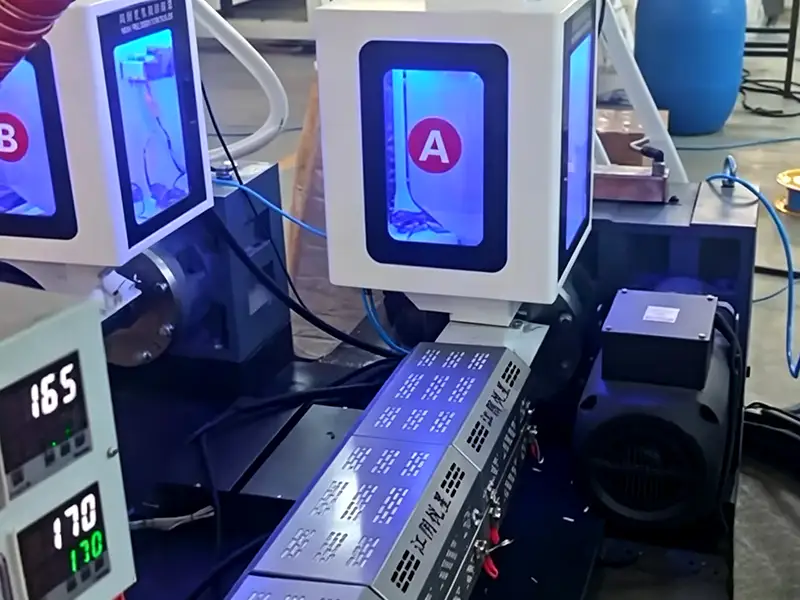
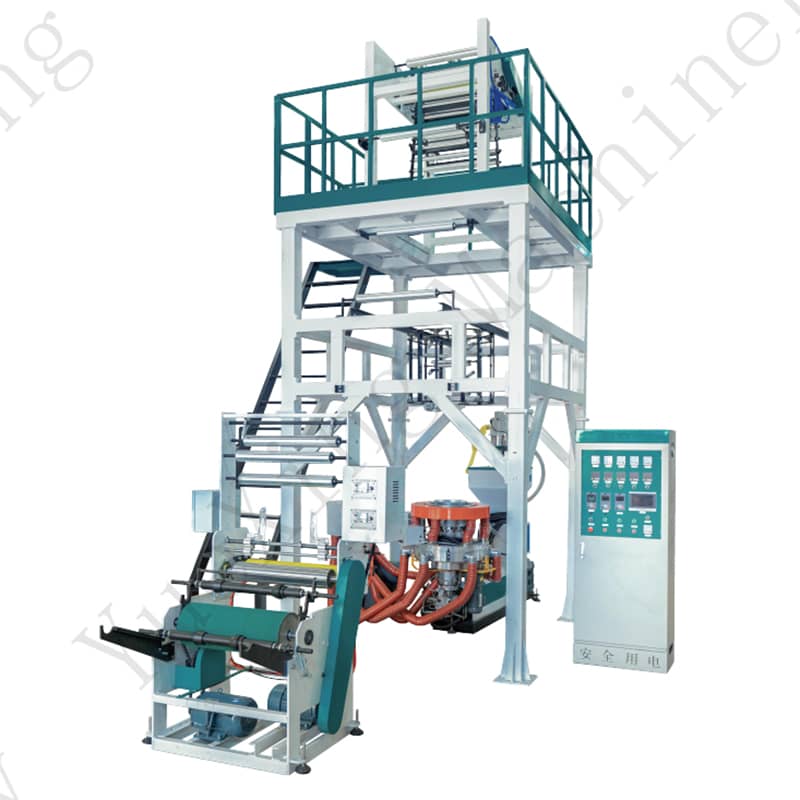
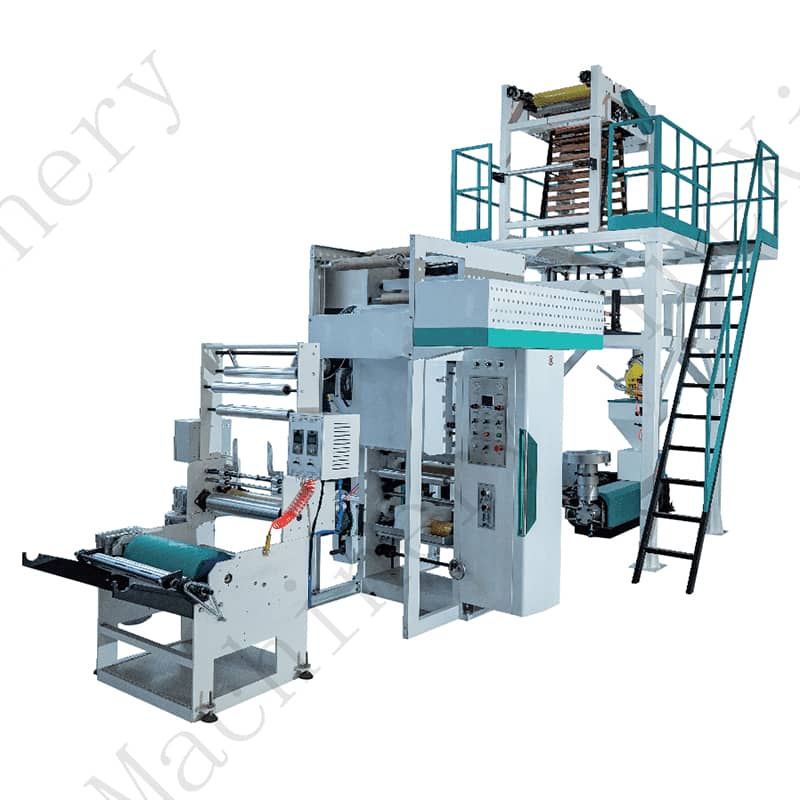
The good news is you don't always need a dedicated biodegradable film blowing machine. Many ABA and ABC lines can handle it with the right resin and settings. Pure PLA is stiff and tends to crack on its own. PBAT is flexible but too sticky to run alone. What works in practice is a modified compound: PLA plus PBAT in a ratio that keeps the film tough without turning gummy. The formula depends on your end product—trash bags need more PBAT, T-shirt bags can carry more PLA.
Our ABA line runs a modified PLA+PBAT compound for a compostable bag line in Thailand. The resin supplier had already done the blending work—PLA for stiffness, PBAT for flexibility, no starch filler—so we only had to drop the temperature profile by about 25°C across all zones and slow the screw speed. No die change, no gravimetric dosing unit. Output fell about 12% compared to standard PE, but the film passed TUV and BPI certification for industrial composting on the first test.
That said, if biodegradable film is your main product, buying a machine built for it saves money long-term. Retrofitting an old line works for trials or small batches. For volume production, the wear on barrels and screws from abrasive bio-additives adds up faster than most owners expect. If you're not sure whether your current line can handle the switch, our guide on how to choose a film blowing machine covers the specs that matter most.
Want to know whether your setup can handle it? Send us your resin specs for a quick check. yanzhang911222@gmail.com
Jiangyin Yuexing Machinery Co., Ltd. — manufacturing film blowing machines since 1996. Over 2,000 installations across 30+ countries.
Expert Insights & FAQ
Previous:Film Blowing Machine from China: What Separates Good Suppliers
Next:Custom Film Blowing Machine: Configuration vs. Custom Engineering (2026 Guide)