Single Layer vs Multi-Layer Film Blowing Machine: Real Cost Comparison 2026
2026-05-16While the initial capital expenditure (CapEx) of a single-layer line is low, its long-term operational expenditure (OpEx) can be higher due to material cost limitations.
Choosing the right film blowing machine is one of the most critical decisions for packaging producers. Get it wrong, and you'll face production inefficiencies, quality issues, or wasted investment. Get it right, and you'll have equipment that serves your business for 15-20 years.
This guide cuts through the marketing hype and technical jargon to give you practical, data-driven insights. We'll compare single layer and multi-layer film blowing machines based on real production costs, output quality, and application scenarios—information that most equipment suppliers won't share.
Quick Comparison: Single Layer vs Multi-Layer
| Factor | Single Layer | Multi-Layer (3/5/7 Layer) |
| Initial Investment | 15,000−50,000 | 40,000−250,000+ |
| Production Capacity | 50-150 kg/h | 100-400 kg/h |
| Film Applications | Basic packaging | High-barrier, specialty films |
| Material Flexibility | Limited to single material | Can combine multiple materials |
| Operating Complexity | Simple | Requires skilled operators |
| Energy Consumption | Lower | 15-30% higher |
| Maintenance Cost | Lower | Higher (more components) |
| ROI Timeline | 12-18 months | 18-36 months |
What is a Single Layer Film Blowing Machine?
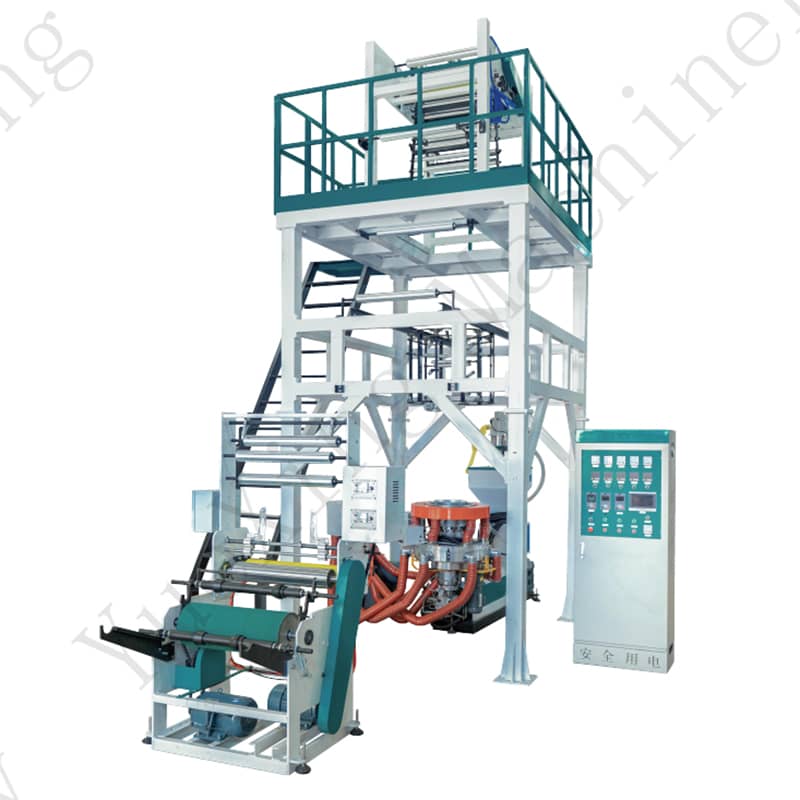
A single layer film blowing machine uses one extruder to melt and extrude polymer resin through a circular die, forming a tubular film bubble. The film is then cooled, collapsed, and wound into rolls.
Key Characteristics:
Simple structure: One extruder, one die head
Lower cost: Typically 15,000−15,000−50,000 for standard models
Easy operation: Minimal training required
Suitable materials: LDPE, LLDPE, HDPE, PP
Typical Production Capacity:
| Screw Diameter | Output Range | Film Width | Suitable For |
| 45mm | 30-60 kg/h | 400-600mm | Small-scale production |
| 65mm | 80-120 kg/h | 600-1000mm | Medium-scale production |
| 90mm | 150-200 kg/h | 1000-1500mm | Large-scale production |
Best Applications:
Grocery bags and shopping bags;Trash liners and garbage bags;Simple packaging films;Agricultural films (non-specialty);Construction films
Limitations:
Cannot produce barrier films;Limited film properties (strength, puncture resistance);No flexibility in material combination;Not suitable for high-performance applications.
In 2026, with global regulations demanding higher recycled content, the ABA configuration is the ultimate cost champion. It allows producers to hide up to 60-70% recycled or calcium carbonate (CaCO3) filler in the middle 'B' layer, while wrapping it in premium virgin resin (A layers) for a flawless surface finish. Single-layer machines simply cannot do this without sacrificing film strength and appearance.
What is a Multi-Layer Film Blowing Machine?
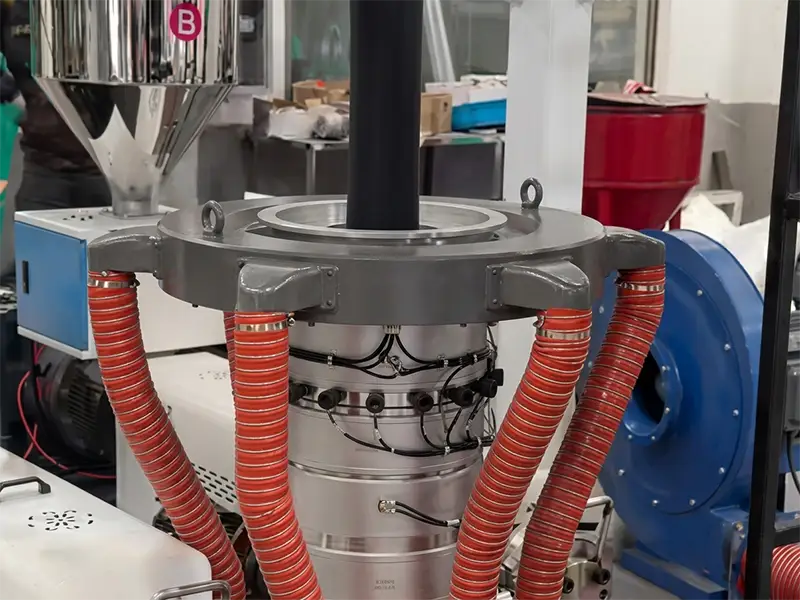
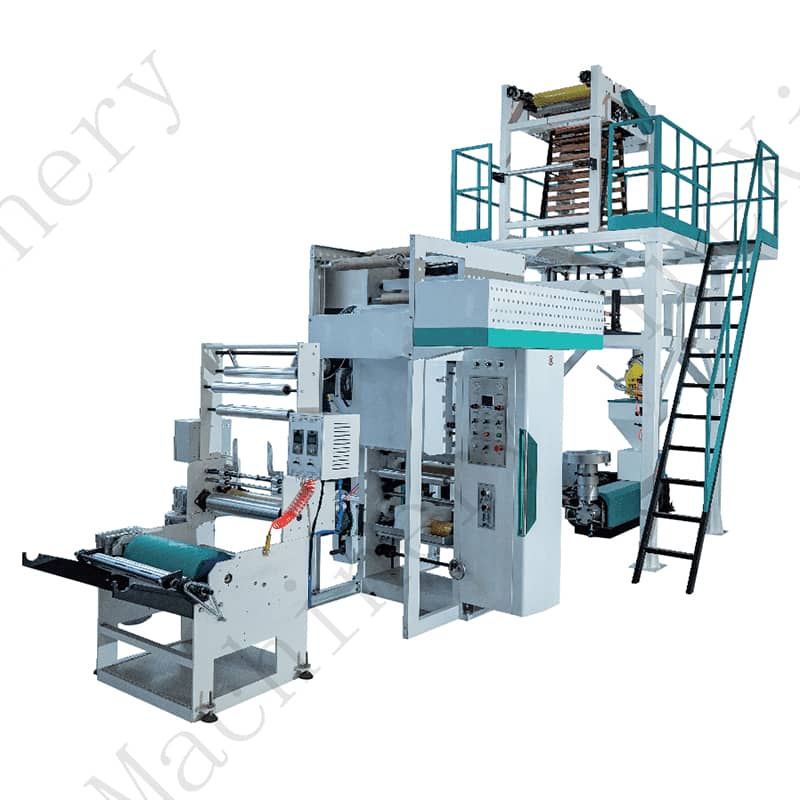
Figure 1: Advanced co-extrusion die head technology allows for precise layer distribution and material cost optimization.
A multi-layer film blowing machine uses multiple extruders (typically 3, 5, or 7) to co-extrude different polymer materials into a single film structure. Each layer serves a specific function—barrier protection, strength, sealability, or cost optimization.
Common Configurations:
ABA Film Blowing Machine (3-Layer):
Layer A (outer): Strength and durability
Layer B (core): Barrier properties or cost reduction (can use recycled material)
Layer A (inner): Same as outer layer for symmetry
ABC Film Blowing Machine (3-Layer):
Layer A: Structural layer
Layer B: Barrier layer (EVOH, PA)
Layer C: Sealant layer
5-Layer Film Blowing Machine:
More sophisticated layer structure
Enhanced barrier properties
Better material cost optimization
Ideal for food and medical packaging
Key Advantages:
1. Enhanced Film Properties
Superior barrier protection (oxygen, moisture, aroma)
Improved mechanical strength
Better puncture and tear resistance
Customizable properties for specific applications
2. Cost Optimization
Use recycled materials in middle layers
Reduce expensive barrier material usage
Optimize material costs while maintaining quality
3. Application Flexibility
Food packaging (extended shelf life)
Medical packaging (sterilization requirements)
Industrial packaging (chemical resistance)
Agricultural films (UV protection)
Typical Production Capacity:
Configuration | Output Range | Film Width | Applications |
| ABA (3-layer) | 100-250 kg/h | 800-1500mm | General packaging, cost-optimized films |
| ABC (3-layer) | 100-200 kg/h | 600-1200mm | Barrier packaging |
| 5-layer | 150-350 kg/h | 1000-2000mm | High-barrier food/medical packaging |
| 7-layer | 200-400 kg/h | 1200-2500mm | Premium specialty films |
Expert Insights & FAQ
Previous:The Overlooked Energy Drain: Optimizing Your Blown Film Line's Cooling System
Next:How Much Does a Film Blowing Machine Cost? Upfront Prices & ROI Secrets
.webp)