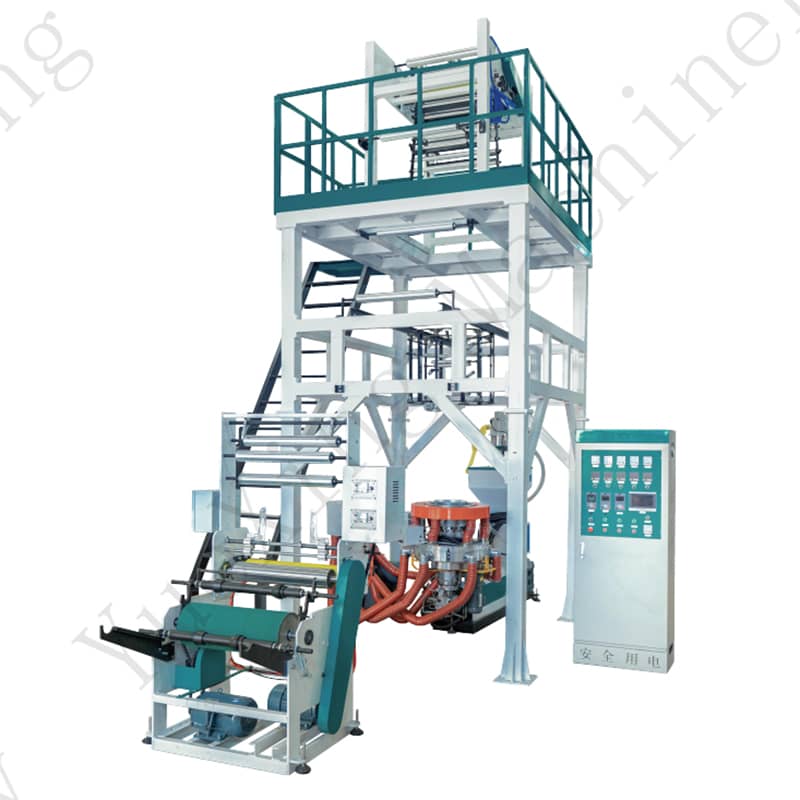
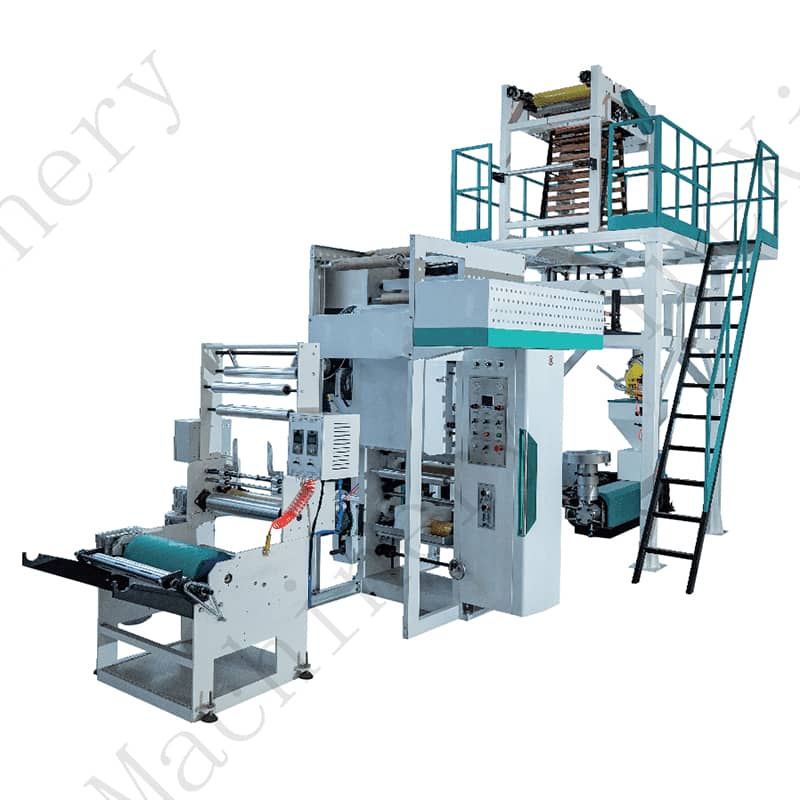
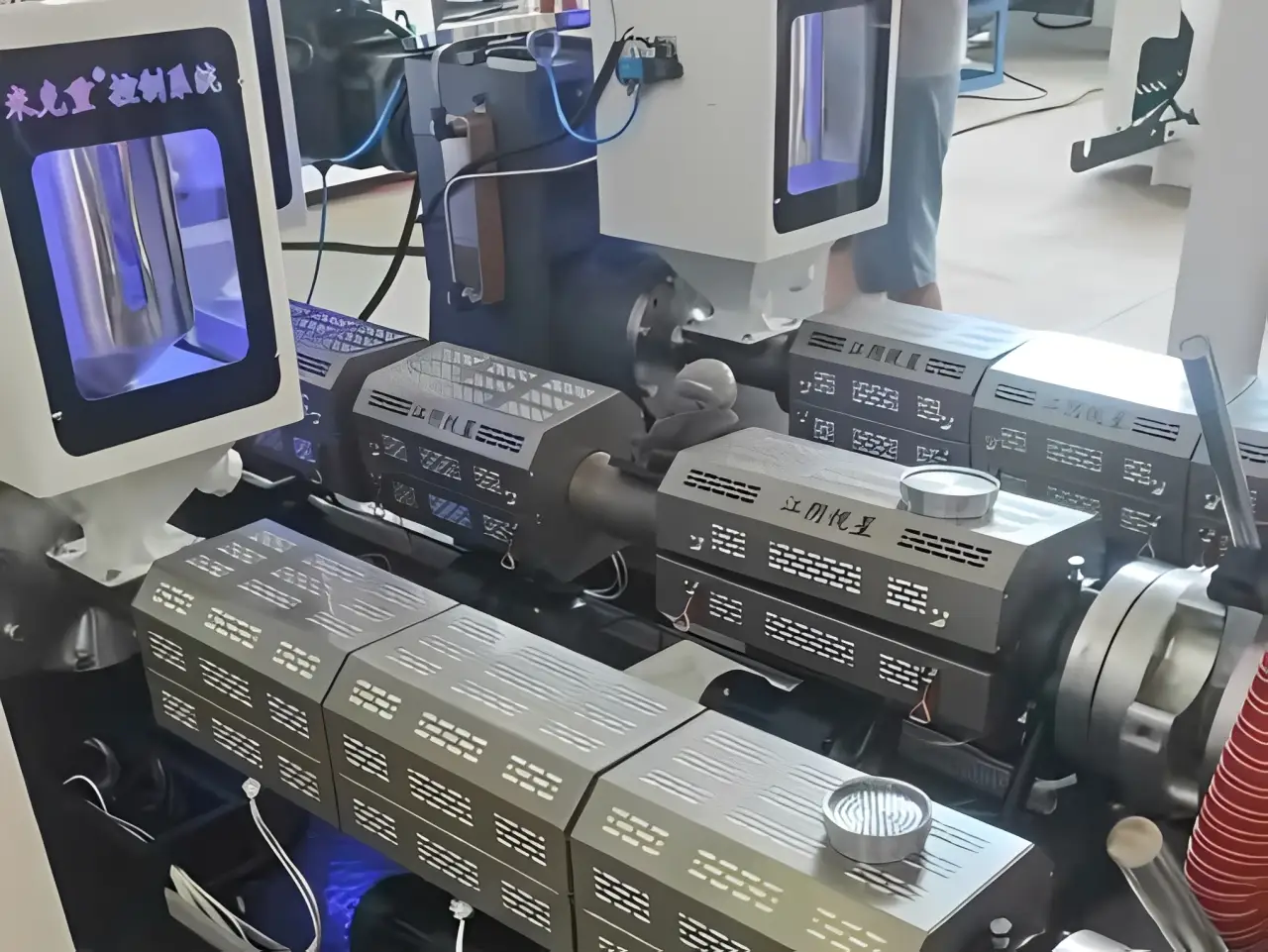
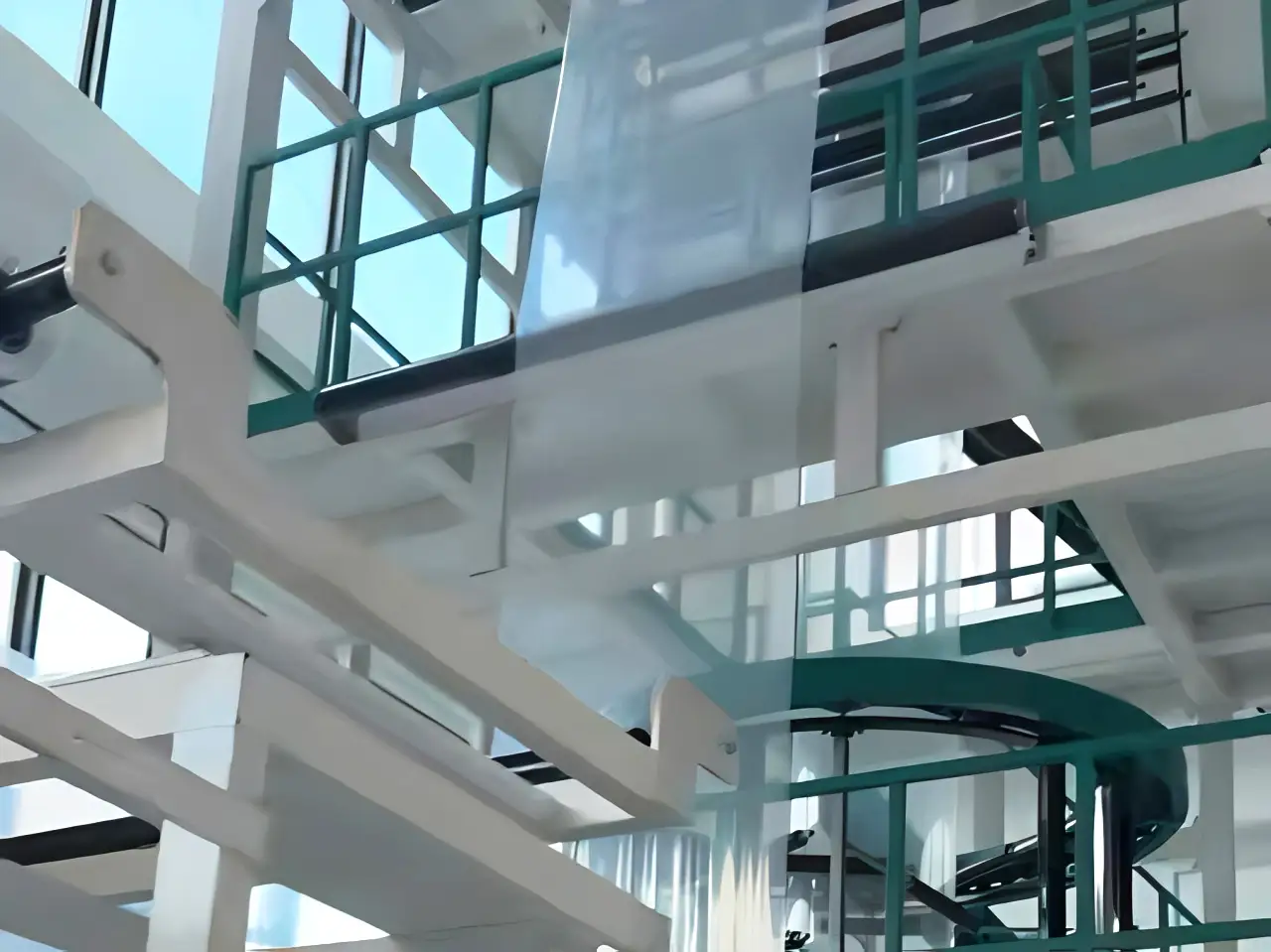
1350ABA film blowing machine (Single-side 50 μm film)
2026-01-16Core Structure and Working Principle
3 Layer Co-Extrusion Structure:Utilizes a twin-screw extrusion system and co-extrusion die to melt the outer layer (A) and the intermediate layer (B) separately, achieving an A-B-A composite structure. This enhances the film's mechanical strength, barrier properties, and heat-sealing performance.
Low-Pressure, High-Speed Process:Achieves high-speed blow-up at lower air pressures, reducing energy consumption while ensuring film thickness uniformity. Suitable for precision thickness control scenarios such as 50 μm.
Intelligent Temperature Control System:Independent PID control for each temperature zone, with an accuracy of ±1°C. Compatible with various resins including LDPE, LLDPE, PP, and PET.
High-Efficiency Airflow Cooling:Equipped with a dual-ring airflow cooling system for rapid film bubble curing, reducing shrinkage and improving surface finish and production stability.
Typical Application Scenarios:
Food Packaging:Used to produce high-barrier three-layer composite bags, extending shelf life.
Agricultural Mulch Film:50 μm thickness balances light transmittance and tear resistance, suitable for greenhouse covering.
Logistics Vest Bags:High-toughness A-B-A structure, strong load-bearing capacity, suitable for e-commerce express packaging.
Contact us now:
ryanzhang911222@gmail.com +86 13771616165 Mr.Zhang
Expert Insights & FAQ
Previous:[8P]Recent photos of film blowing machine shipments
Next:3 Layer Co-Extrusion Film Blowing Machine–Enhancing Film Performance and Reducing Production Costs