What is a Film Blowing Machine Used For? A Complete Guide to Its Functions, Principles, and Applications
2026-11-11Introduction: The Role of Film Blowing Machines
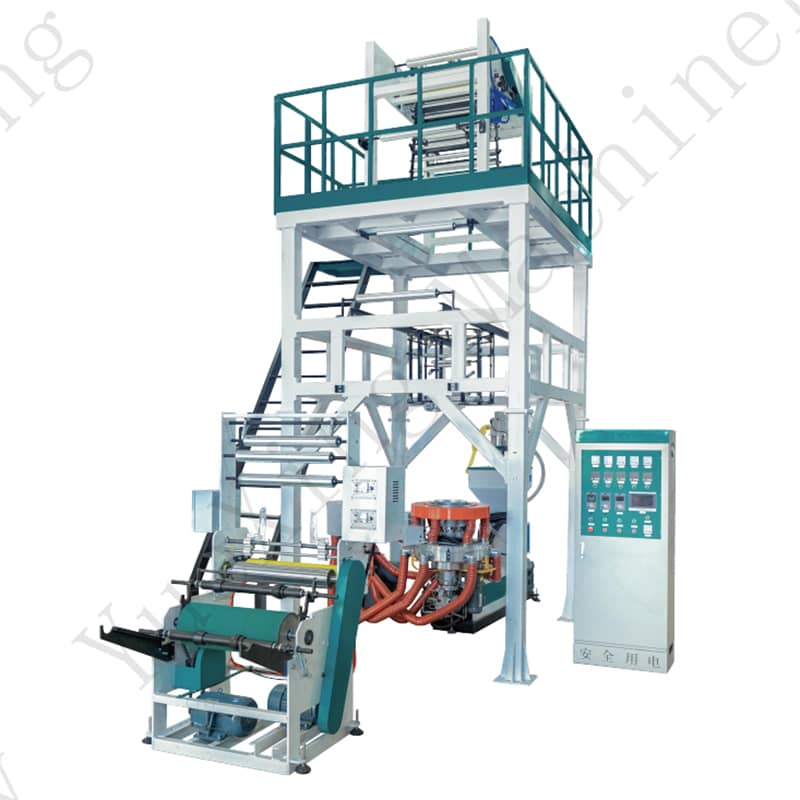
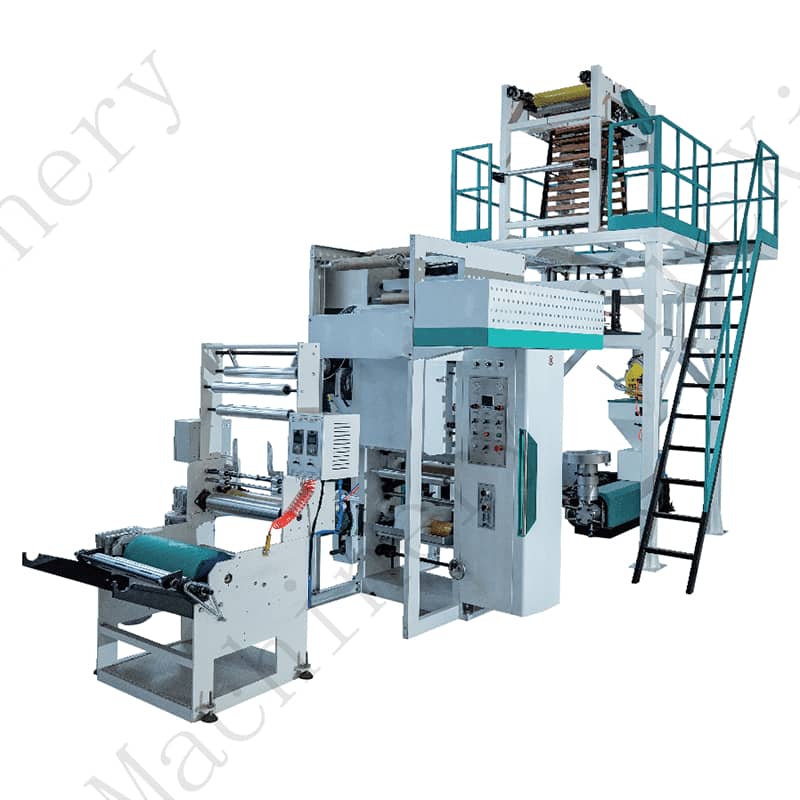
A film blowing machine (also known as a film blowing extruder) is a core piece of equipment in the plastic processing industry, primarily used to produce various types of plastic films. From everyday shopping bags and garbage bags to agricultural greenhouse films and industrial packaging films, most plastic films are manufactured using film blowing technology.The second half of this page turns that into a buying decision: what drives the price, which build suits which film, and what to check before you place an order.
Globally, the film blowing process is one of the most efficient and cost-effective methods for plastic film production. According to the Plastics Industry Association (USA), approximately 60% of plastic films worldwide are produced using blow molding technology, widely applied in packaging, agriculture, medical, and other industries.
1. Key Applications of Film Blowing Machines
Plastic films produced by film blowing machines have a wide range of uses, including:
1.1 Packaging Industry
-
Shopping bags/garbage bags: Made from HDPE (High-Density Polyethylene) or LDPE (Low-Density Polyethylene) for flexibility and strength.
-
Food packaging films: Such as cling film and vacuum-sealed bags, typically made from LLDPE (Linear Low-Density Polyethylene) or PP (Polypropylene) to ensure food safety.
-
Industrial packaging films: Including stretch films for securing goods during transportation.
1.2 Agricultural Sector
-
Mulch films: Improve soil moisture retention and temperature control for better crop growth.
-
Greenhouse films: Made from EVA (Ethylene-Vinyl Acetate) or PO (Polyolefin) for high light transmission and weather resistance.
1.3 Medical & Specialty Applications
-
Medical packaging films: Used for IV bags and pharmaceutical packaging, requiring strict hygiene standards.
-
Barrier films: Used in electronics and high-end food packaging, often produced via multi-layer co-extrusion for enhanced oxygen/ moisture resistance.
2. How Does a Film Blowing Machine Work?
The film blowing process consists of extrusion → inflation → cooling → haul-off → winding:
-
Extrusion
Plastic pellets (e.g., PE, PP) are melted in an extruder and pushed through a circular die to form a molten tube. -
Inflation (Bubble Formation)
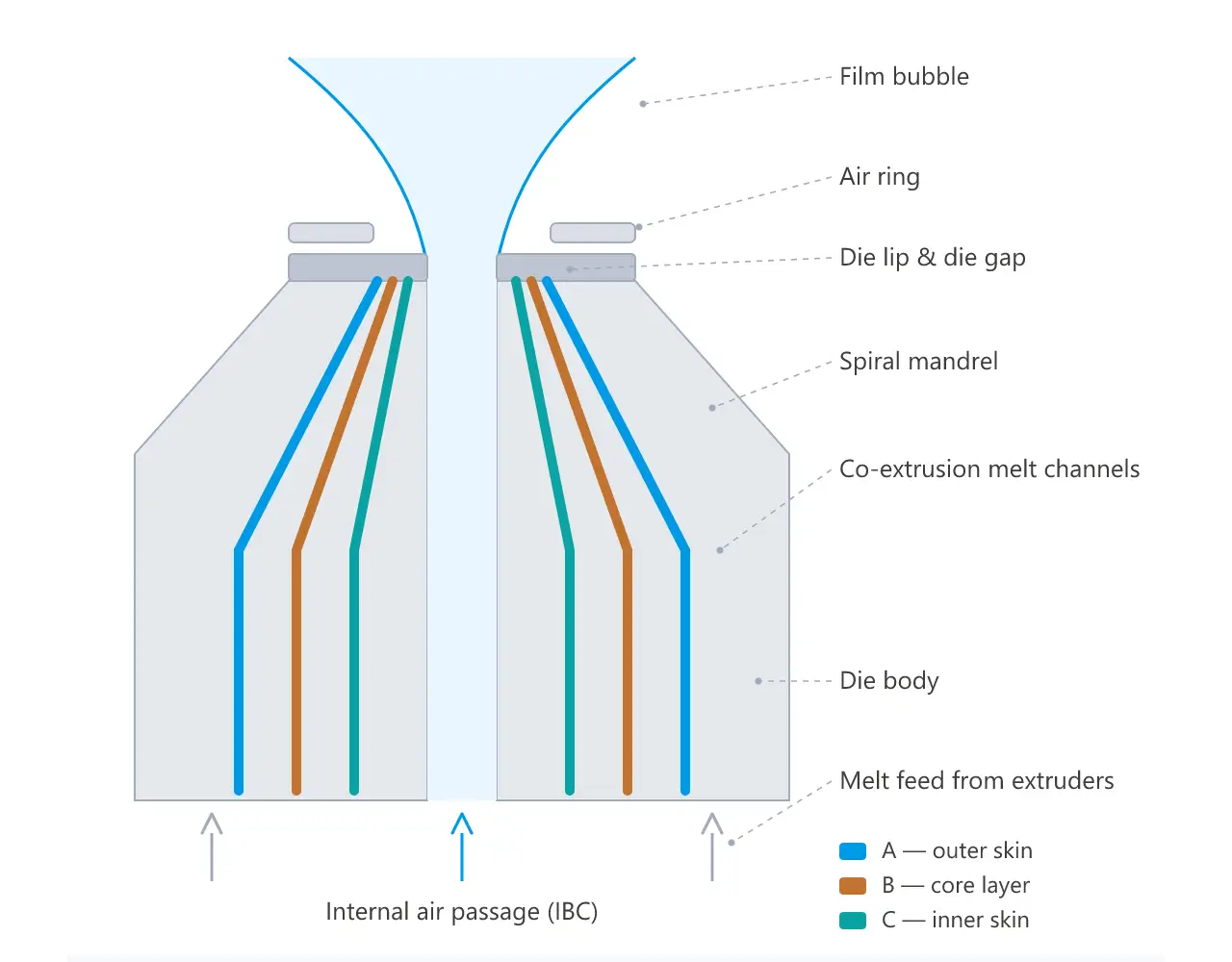
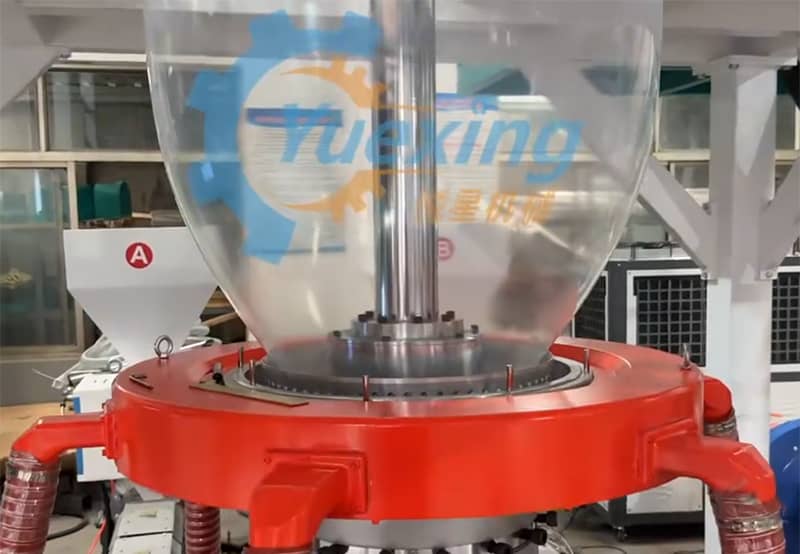
Compressed air is blown into the tube, expanding it into a film bubble, which is then cooled by an air ring. -
Haul-Off & Winding
The bubble is stretched by nip rollers to control thickness and width before being wound into rolls.
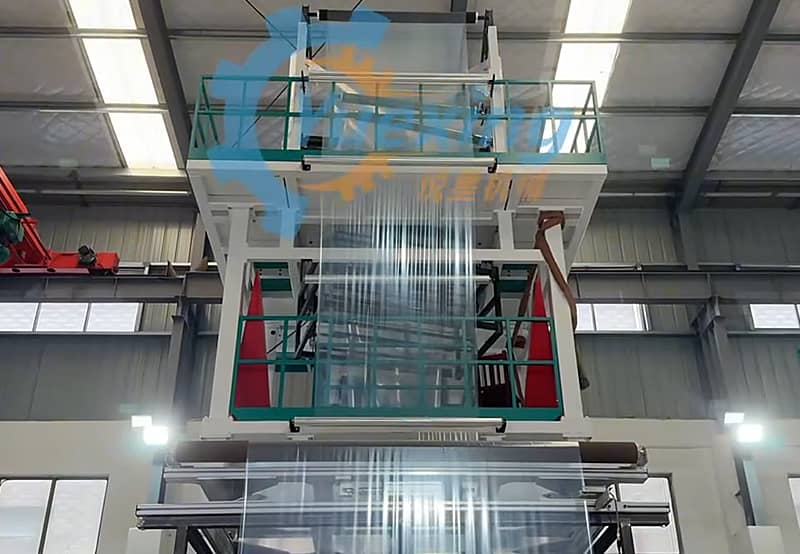
The bubble is formed at the die, cooled by the air ring, then pulled up the tower.
3. Common Materials Used in Film Blowing
Different plastics determine film properties and applications:
| Material | Properties | Common Uses |
|---|---|---|
| LDPE | Soft, high clarity | Cling film, lightweight bags |
| HDPE | High strength, tear-resistant | Shopping bags, garbage bags |
| LLDPE | Tough, puncture-resistant | Stretch films, heavy-duty packaging |
| PP | Heat-resistant, rigid | Food packaging, medical films |
| EVA | Highly transparent, flexible | Greenhouse films |
4. Types of Film Blowing Machines
Film blowing machines can be categorized based on structure and functionality:
-
Single-Layer Blowing Machine
-
Simple design, suitable for standard films (e.g., HDPE/LDPE).
-
Double/Multi-Layer Co-Extrusion Blowing Machine
-
Combines different materials (e.g., PE/PP/EVOH) for enhanced barrier properties.
-
High-Barrier Blowing Machine
-
Specialized die design for oxygen/moisture-resistant films (e.g., aluminum composite films).
5. Key Industries Using Film Blowing Machines
Film blowing machines serve multiple industries:
✔ Food Packaging (snack bags, beverage labels)
✔ Agriculture (mulch films, greenhouse covers)
✔ Medical (IV bags, sterile packaging)
✔ Industrial (construction films, electronic protection films)
6. What Drives the Price of a Film Blowing Machine
Two lines that look the same on a quotation sheet are rarely the same machine. Price moves with five things, and none of them is a discount.
Film width.The die diameter and the tower height follow the width you need. A wider line costs more before any option is added.
The number of layers.Each layer is another extruder, another set of melt channels in the die, and another thing that has to hold steady on the run. An ABA line is not a three-layer line with one extruder removed.
Output.Screw diameter and cooling capacity set how many kilos an hour the line can hold. A headline output figure quoted without the width and the thickness attached to it is not a comparable number.
Automation.Automatic gauge control, internal bubble cooling and an automatic winder are the three options that most often decide whether a line runs unattended.
The winder.The component buyers most often specify down, and the one they most often regret on thin film.
If you want the arithmetic behind the layer decision, the cost comparison between single-layer and multi-layer machines covers it.
7. Matching the Machine to the Film
The film decides the build before the budget does. A rough map:
| Film you are making | Usual build | What decides the machine |
|---|---|---|
| Shopping, carrier and garbage bags | Single layer or ABA | Resin, bag thickness, kilos per hour |
| Greenhouse and mulch film | Single layer, wider die | Width, UV package, thickness |
| Stretch and industrial film | Single layer or three-layer | Width, and tension control at the winder |
| Food, medical and barrier film | Three-layer or five-layer | Barrier resin, layer ratio, gauge control |
Two of these come up more than the rest. Thin bag film is where gauge drift shows first, and it is covered in thin gauge film bag machines. Barrier and food film is where the layer structure stops being a cost question and becomes a performance one — the three-layer ABC platform is the build for that. If the width you need is outside a standard model, the starting point is a custom film blowing machine.
8. Buying from China: Four Things to Check
Most buyers comparing suppliers end up looking at the same photographs. Four things separate a real line from a catalogue entry.
A test run on your resin.Not a video of the supplier's own material — your resin, your thickness, a sample roll you can measure.
A written standard-versus-optional list.Which items are in the base price and which are add-ons. A quote that does not separate them cannot be compared with another quote.
Spare parts that ship in days.Ask what is on the shelf and what has to be made. The answer tells you how long a stoppage will last.
Who commissions the line at your plant.Installation, training and the first production run. A supplier who cannot answer this one has not exported much.
9. Conclusion: How to Choose the Right Film Blowing Machine?
Choosing comes down to three questions: what film you are making, how many kilos an hour you need, and who runs the line at three in the morning.
The first two decide the machine. The third decides how much automation you should buy — automatic gauge control and an automatic winder are what let a thin spec hold without an operator standing at the tower.
If you are still working out whether you need more than one layer, start with the difference between ABA and ABC blown film lines and the five applications where an ABA line pays off.
For a standard bag or agricultural film, the LDPE single-layer platform and the HDPE single-layer platform cover most of it. If the film needs two different faces or a cheaper core, the ABA platform is the next step.
Send us the film spec — end product, width, resin and thickness — and we will tell you which build we would put on it and what it changes in the price.